What they look like
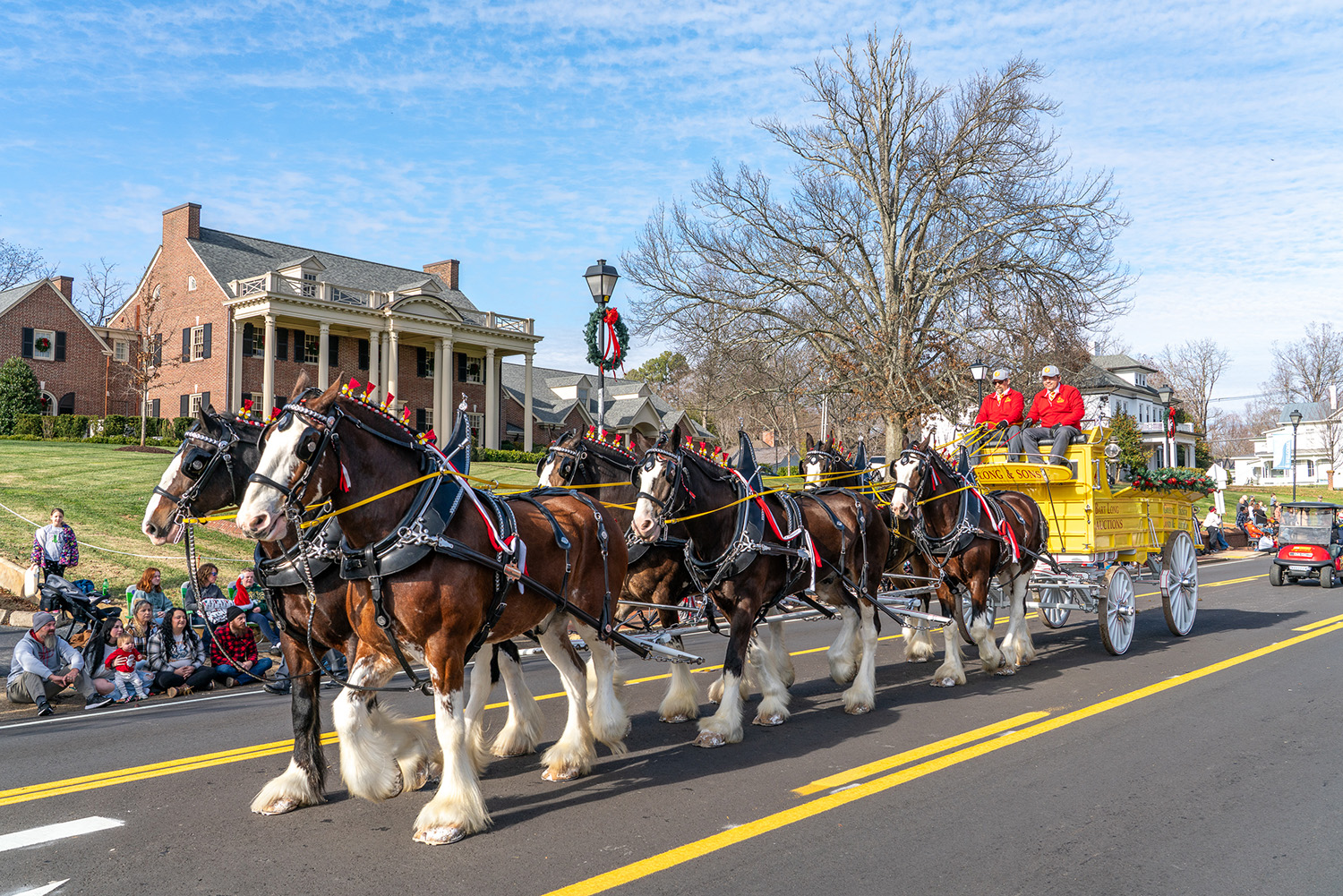
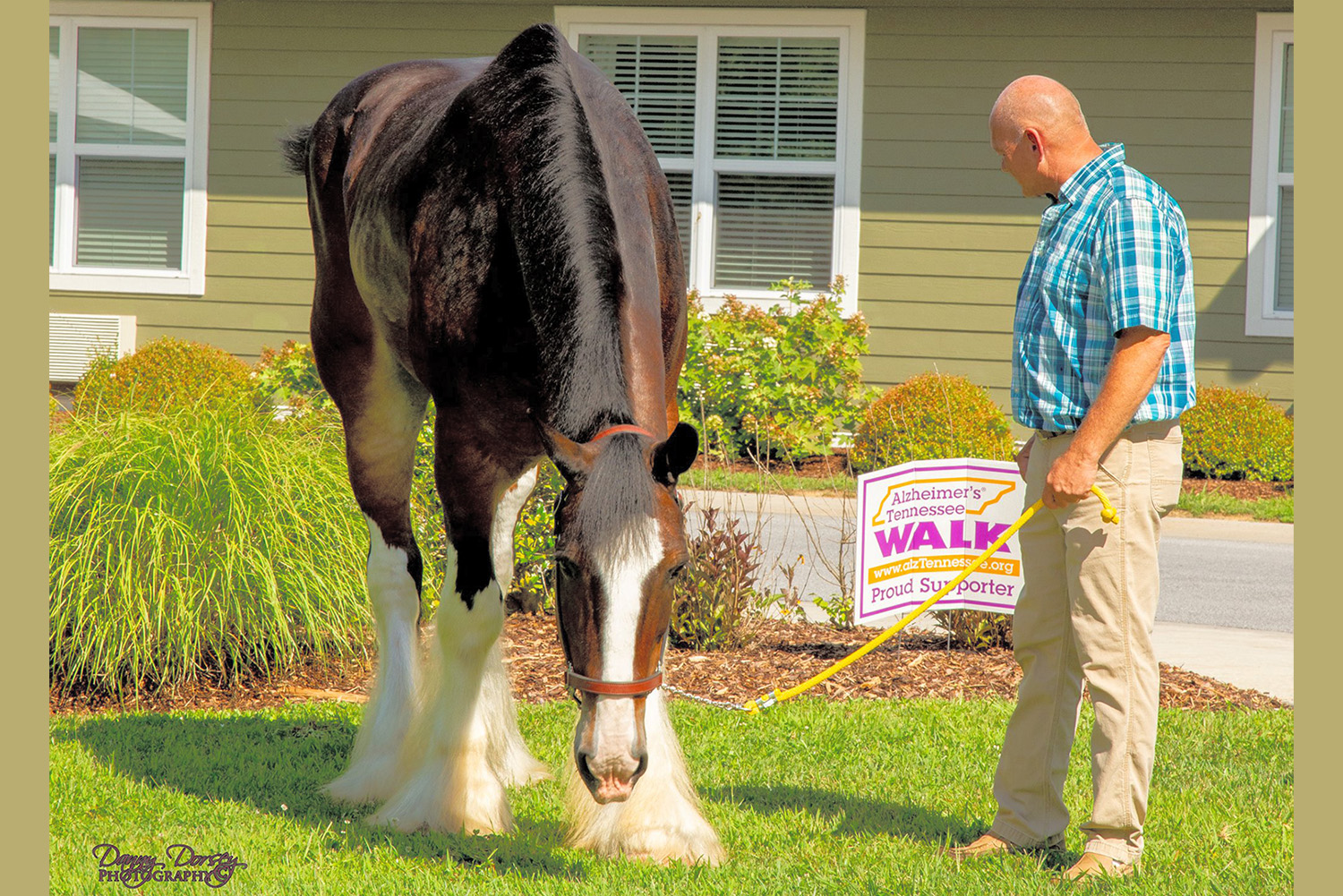
Clydesdales are known for their feathering on the lower legs and bold white markings. Common colors include bay, brown, and roan, often with a white blaze and white legs.

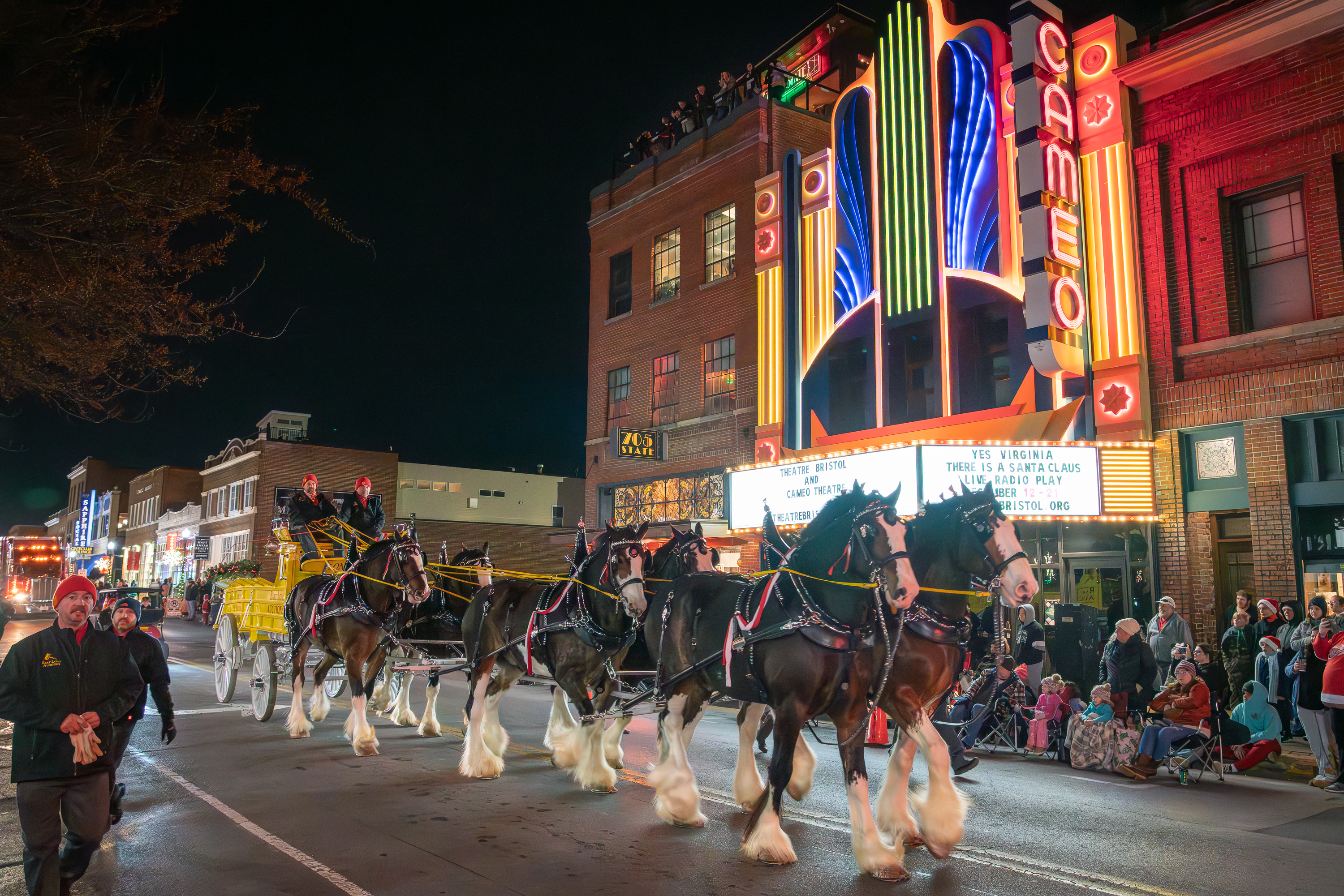
The Auction Clydesdales are stabled in Bristol, Virginia, and are owned by Bart Long and Associates Realty & Auction LLC. Bart has grown Bart Long Auctions into one of the largest real estate auction firms in the southeastern United States. We are proud to have The Auction Clydesdales serve as ambassadors for our auction business and enjoy sharing them with our community through local parades, fairs, and special events throughout the year.
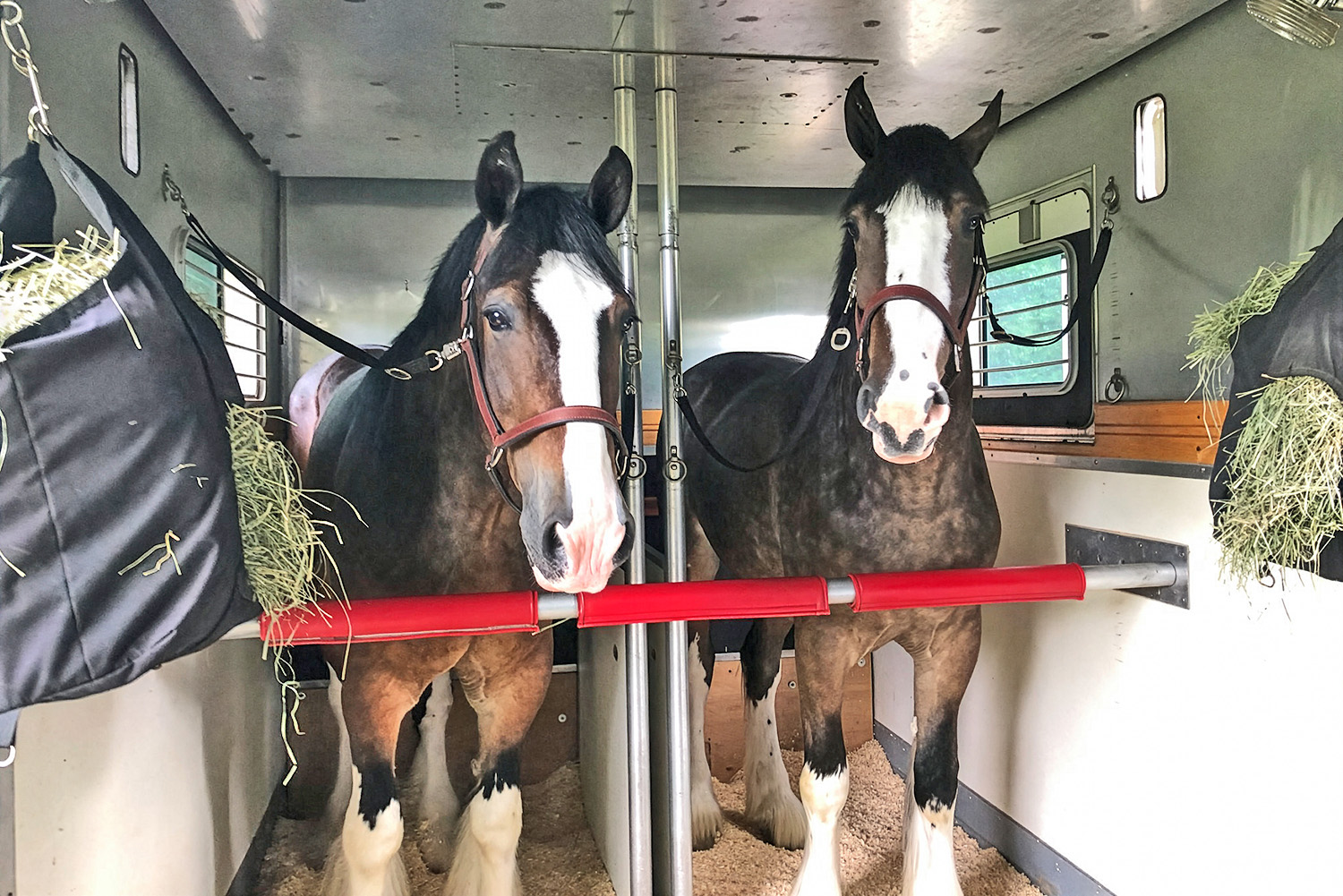
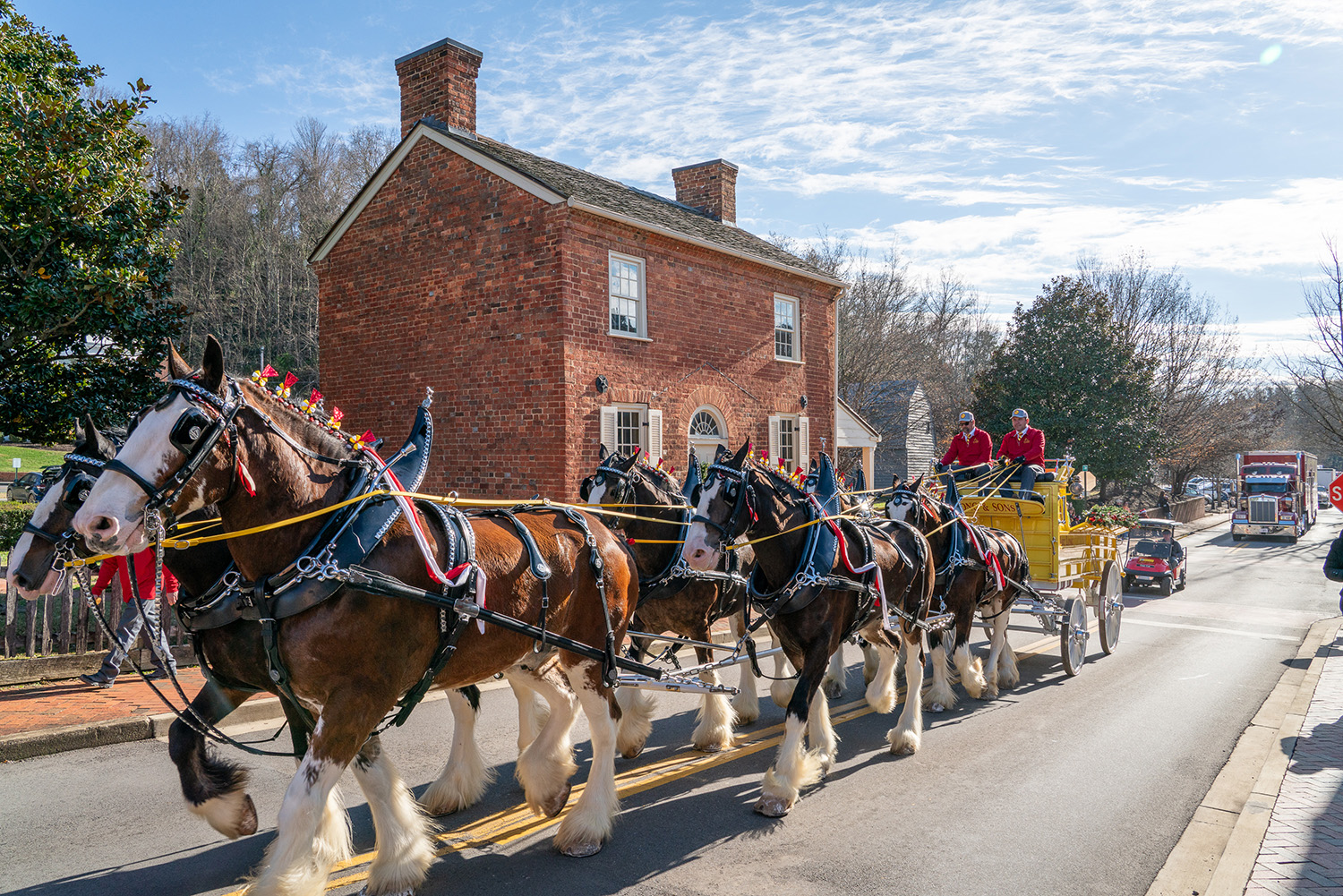
The horses in the Clydesdale hitch are selected from leading Clydesdale breeders in the United States and Canada. Each horse is bay in color, stands approximately 19 hands tall (about 6' 4" measured from the withers), and weighs around 2,200 pounds. Their size comes with a healthy appetite—each horse consumes roughly 50 to 70 pounds of feed and hay per day.
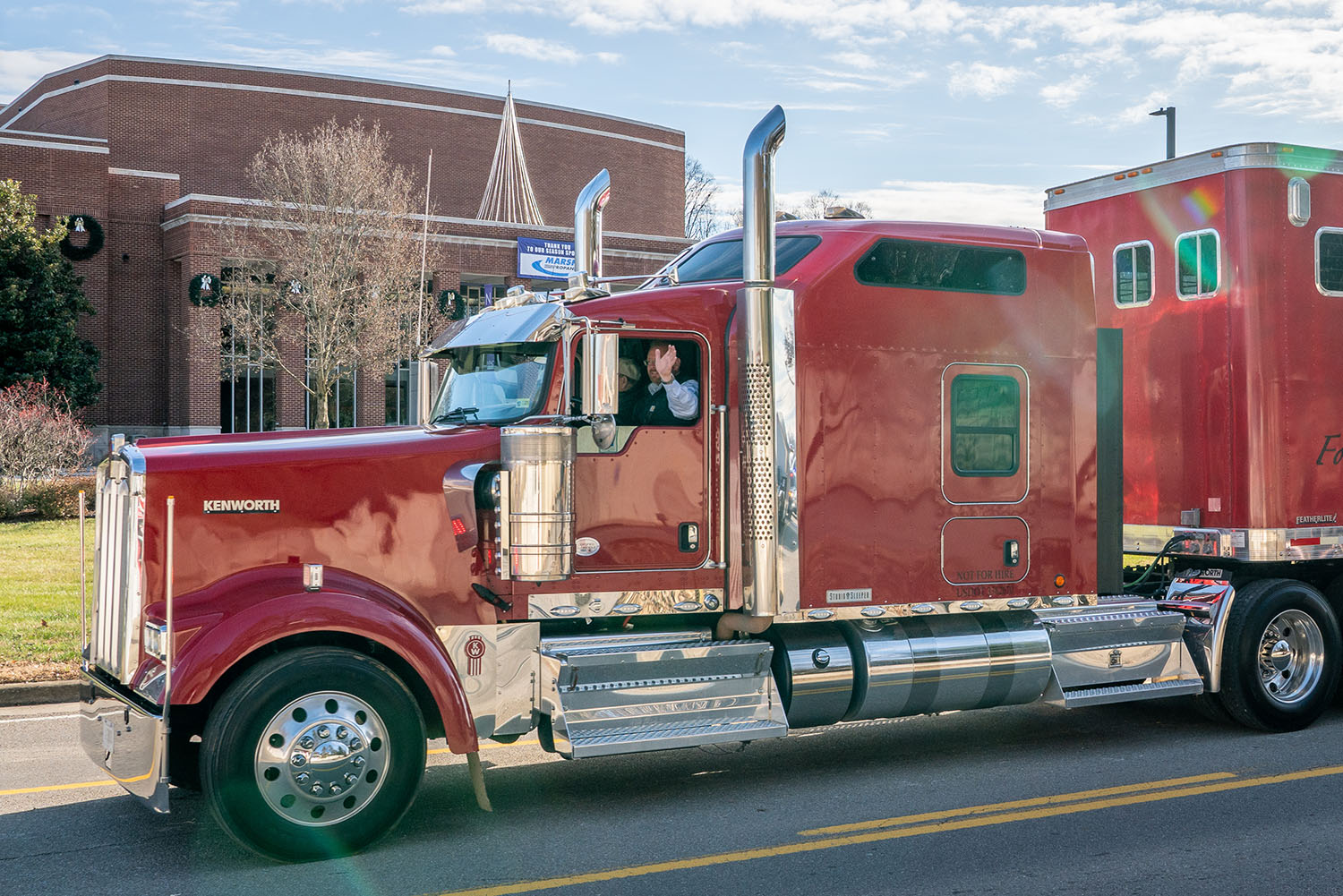
The horses and equipment are transported in a custom 53-foot Featherlite semi-trailer designed specifically to haul the horses, harnesses, and wagon. The classic yellow hitch wagon was originally built in 1908 by the Studebaker Bros. Company in South Bend, Indiana, and was fully restored by Lawrence Wagon Works in 2010. Today, it remains one of only a few wagons of its kind still in use in the United States. We hope you’ll join us at one of our upcoming events and have the opportunity to see The Auction Clydesdales in person.
The Clydesdale is a draft horse breed from Scotland. The breed is associated with the Clydesdale district of Lanarkshire, named for the River Clyde. Its development is commonly traced to the mid-1700s, when local mares were bred with larger stallions to add size and pulling power for farm work and hauling.
The name “Clydesdale” was first recorded for the breed in 1826 at an exhibition in Glasgow. As the type became more standardized, the Clydesdale Horse Society of Scotland was formed in 1877. In the late 1800s and early 1900s, large numbers of Clydesdales were exported around the world, especially to other parts of the British Empire.
Have questions about auctioning your real estate? Visit our Contact page.
Clydesdales are known for their feathering on the lower legs and bold white markings. Common colors include bay, brown, and roan, often with a white blaze and white legs.
They were developed as powerful, steady working horses for agriculture and heavy hauling. Their strength and calm temperament made them well suited to pulling loads and working long days.
The combination of size, feathered legs, and high-contrast markings gives Clydesdales a distinctive look. Over time, they have become a familiar symbol in parades, ceremonies, and public displays.
Click a photo to view it larger.
If you have questions about Bart Long Auctions, upcoming auctions, or our marketing, reach out here.